
At the NYSC orientation camp, soldiers use trumpet sounds at different times of the day to control camp activities. These bugle sounds are not played randomly. Each one is a clear signal telling corps members what to do next, whether to wake up, assemble, eat, go to bed, etc.
The instrument used is called a bugle. In camp, you will hear people pronounce it in different funny ways. Some write it as biggle, beagle, or even biggu 😅 but they are all referring to the same bugle the military uses to pass instructions quickly across a large camp.
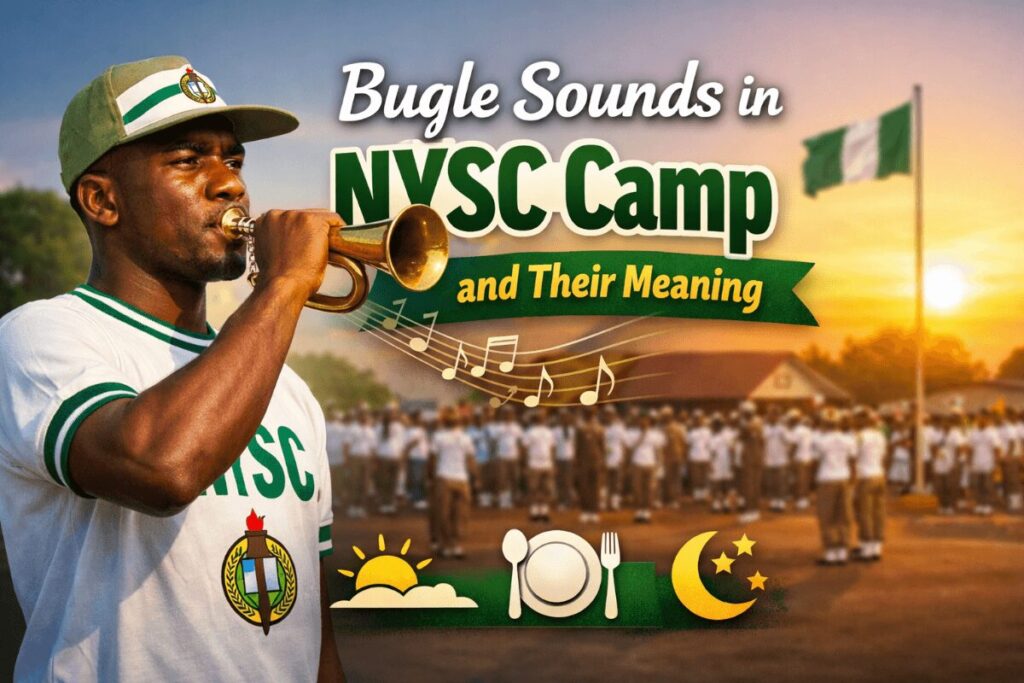
Historically, the bugle was used in military camps and on the battlefield to relay orders and coordinate movements during missions or war, long before radios or loudspeakers existed. The military has relied on bugle calls for many years because the sound travels far and is easy to recognize.
Since the orientation camp is highly regimented, NYSC adopted the same system to keep thousands of corps members organized during the three-week orientation course. At first, the sounds may feel strange or even harsh, especially for new PCMs. But give it a few days. Once you understand what each sound means, camp life becomes much easier to follow.
Daily Bugle Sounds In Camp
These are the main bugle sounds you will hear in camp, and knowing what each one means will help you move through the day smoothly.

First Call (Wake Up)
A typical day in camp usually begins at 4:00 am with the First Call. This is the early morning alert that signals corps members to wake up and get ready for morning devotion and the morning parade. Many corps members are already awake before this call, with some starting their day as early as 3:00 am, but officially, this is the signal that the day begins. For most people, it can feel really annoying because it interrupts sleep. Even so, it is an important part of camp discipline and routine.
Reveille (Morning Flag Hoisting)
The Reveille is blown at 6:00 am for the hoisting of the national flag. By this time, most corps members are already on the parade ground, but for anyone who is not yet there, it is a signal to stand at attention immediately. In camp, there is a funny saying that “Nigeria wakes up, Nigeria sleeps,” and this bugle is what signals that Nigeria has just woken up.
Officially, it kicks off the day’s activities and tells everyone to assemble in full uniform. Even if you are a few steps behind, this call is a clear reminder that it is time to be alert and ready for the day ahead.
Assembly (Parade / Fall-In / Double Up)
The Assembly call is played several times throughout the day to get corps members together in a specific place. In the morning, it signals the start of parade, and in the evening, it is used for the evening parade.
During lectures, pep talks, or other gatherings, it is blown to grab attention and tell everyone to assemble quickly. Corps members already know what it means, so when you hear it, you stop what you are doing and move to the designated place in an orderly way. It is a clear and compulsory call that attention is needed immediately.
Mess Call (Meal Time)
The Mess Call is the one that corps members love the most. It is perhaps the most memorable bugle call because it signals food, giving everyone a welcome break from what they have been doing. It is played for breakfast, lunch, and dinner. When the call sounds, corps members are expected to go to the dining area with their food flask and meal ticket in an orderly manner. Being late can be costly because once the food is finished, there is no second chance.
Retreat (Evening Flag Lowering)
At exactly 6:00 pm, Retreat is played for the lowering of the national flag. This is when “Nigeria sleeps.” Irrespective of what they are doing, everyone must stand at attention wherever they are, just as they did for the flag hoisting in the morning. This marks the end of the official formal activities for the day. It does not mean that the day is completely over. After Retreat, corps members can enjoy relaxation activities such as movie night, drama, or social gatherings.
Taps (Light Out)
The day ends with Taps, the lights-out call. When it sounds, all corps members are expected to return to their hostels, switch off lights, and go to bed. After the busy schedule of the day, it officially marks the end of organized activities, giving corps members time to rest before the next day begins.

What These Bugle Sounds Means for You
With this understanding, the bugle sounds in NYSC camps should make sense to you now. What feels confusing at first, or even annoying, is actually part of a system designed to keep thousands of corps members moving in order.
In a place as busy as the NYSC orientation camp, coordination is everything. The bugle helps reduce noise, saves time, and ensures everyone responds at the same moment. Without it, daily camp activities would easily fall into chaos.
The funny part is this. In your first few days, the bugle sounds may jolt you awake and get on your nerves. But before the three weeks are over, your body will start responding automatically. And long after camp ends, hearing a similar bugle sound somewhere might just take your mind straight back to NYSC memories.
Is there a different sound played that I didn’t include here? Leave a comment below.
People are also reading:
18 Types Of Corps Members In Every NYSC Camp
My Unforgettable Experience at Abia NYSC Camp